
What Is the Best Surface for a Dog Run?
Because no matter how carefully we design the space, every dog has an opinion.

Lulu Stritarski, taking her dog run research very seriously.
What Is the Best Surface for a Dog Run in California?
Because no matter how carefully we design the space, every dog has an opinion.
My dog Lulu is a California dog, and she is fully convinced she is a person. So I always design dog spaces with that in mind: practical for the humans, but comfortable enough for the dog who thinks she owns the house.
Designing a dog run sounds simple until you actually think about how dogs use the space.
They run. They sniff. They dig. They hide. They roll on the ground. They choose one favorite spot to pee over and over again. And then the homeowner wants the area to look beautiful, smell clean, drain well, feel natural, and require almost no maintenance.
That is where good design matters.
The best dog run is not just a surface. It is a small landscape. And in California, where we think about water, shade, heat, drainage, wildlife, and outdoor living, the smartest answer is usually not one single material. It is choosing the right combination for the dog, the site, and the way the family actually lives.
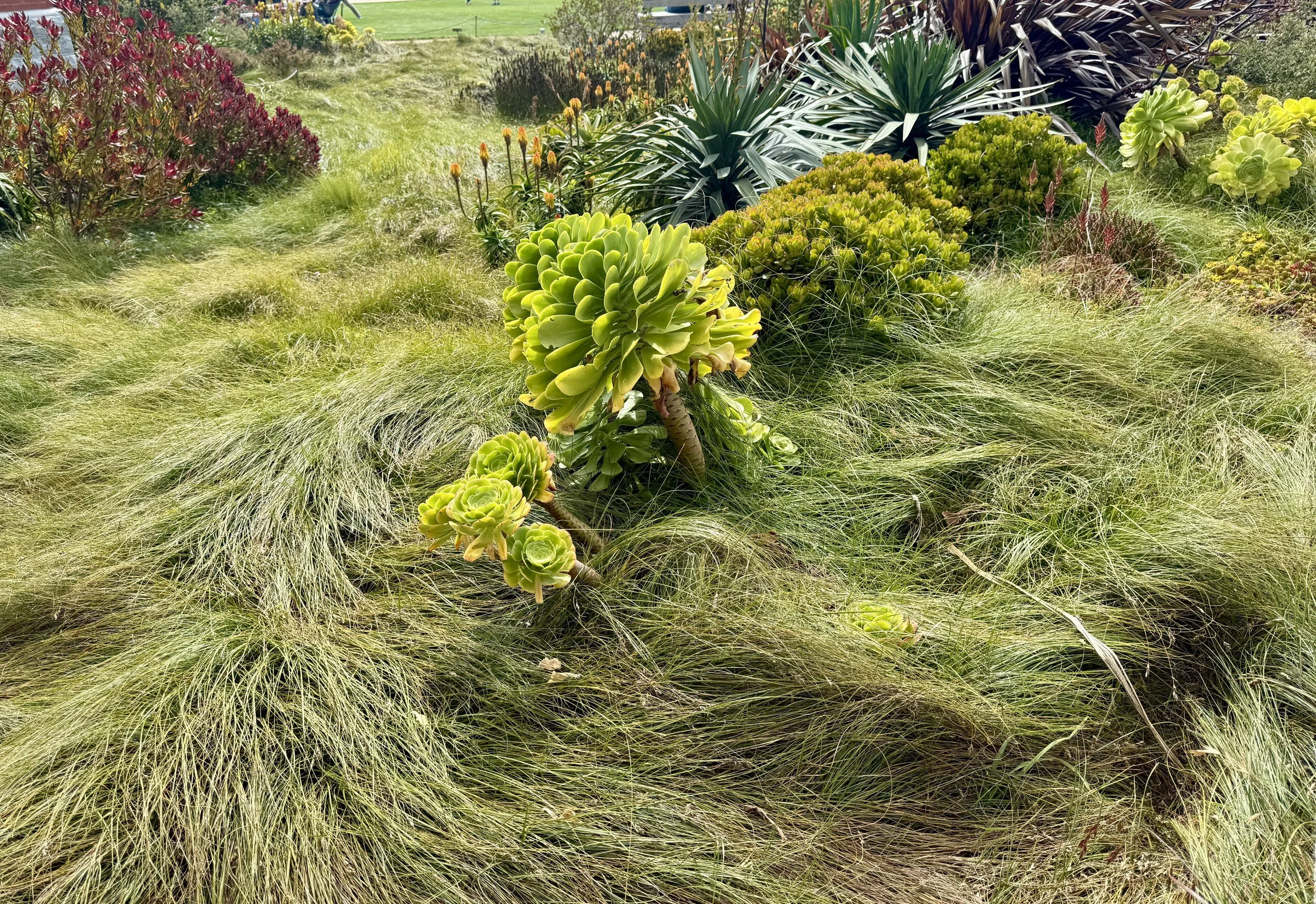
The Best Choice: A Dog Garden, Not Just a Dog Run
For a larger dog run, especially on a slope or a bigger property, my favorite approach is to treat the space like a small planted garden.
Dogs are not always looking for a flat rectangle. Some dogs love to explore. Some like to hide a little. Some like to walk through plants, sniff around, and choose their own little paths. For those dogs, a planted dog run can feel much more interesting than gravel, mulch, concrete, or turf alone.
A soft, meadow-like planting can make the space feel less like a kennel and more like a place that belongs in the garden. It moves with the wind, softens the ground, and creates little pockets for dogs to investigate.
For a true dog play area, I would look at low, soft, resilient grasses and sedges rather than tall ornamental grasses. Two of my favorite California-friendly options are:
Carex pansa
Carex pansa is one of my favorite choices for a California meadow-lawn look. It stays low, feels soft, and can be mowed or left a little more natural. It is not indestructible, but in a larger area where the dog is not running the exact same path every day, it can work beautifully.
Carex praegracilis
Carex praegracilis has a similar natural look but can be a little tougher and more adaptable. With good soil preparation, regular water during establishment, and enough space for recovery, it can create a soft, natural surface that feels much more garden-like than a standard dog run.
Fine fescue can also be considered in the right conditions, especially where the goal is a softer, natural meadow feeling rather than a traditional lawn.
I also like combining grasses with small shrubs, soft succulents, and low planting pockets. Dogs love that kind of space. They like to sniff, hide, and investigate. It gives them something more interesting than just a straight side yard.
And if I ask myself what Lulu would choose, the answer is easy because I know her. She would choose soft groundcover grasses, little paths between the plants, and enough texture to sniff, hide, and explore.
That is the dream version of a dog run: not just a potty area, but a little garden made for curiosity.
A Note About Safety and Visibility
A planted dog run needs to be designed thoughtfully.
For smaller dogs, I would be careful with very dense planting. Tall grasses and thick shrubs can become hiding places for wildlife, and in some areas that can be a concern. The planting should feel natural, but still open enough that you can see what is happening.
I like using planting in layers. Keep the main movement area lower and more open, then use shrubs, succulents, or grasses around the edges to create interest. That way the dog still gets a garden experience, but the owner can easily see, clean, and maintain the space.
The Real Secret: Shade and Drainage
When a dog run starts to smell, the issue is usually not just the surface material. It is often urine sitting in the material or getting trapped in a base that does not drain well.
A good dog run needs to be washable, breathable, and permeable. The urine needs somewhere to go. If it sits on top, or gets trapped in fine particles, odor will eventually become a problem.
Shade is just as important, especially in California. Dogs should not be spending all day in a hot, exposed side yard. Even the best material can become uncomfortable in full sun.
The most successful dog runs usually have:
Good drainage
Some shade
A surface that can be cleaned
A layout that is easy to maintain
Enough comfort for the dog
Enough beauty for the people
That is the balance.
Artificial Turf: Clean, Pretty, and Best When Chosen Carefully
Artificial turf is a popular choice for dog runs because it looks clean, stays green, and creates a finished look right away. For many clients, especially in small side yards or narrow dog areas, this can be a very attractive option.
The important thing is to use turf made specifically for pets, not just regular artificial grass. Pet turf usually has better drainage, including holes in the backing, so urine can pass through more easily. There are also deodorizing and disinfecting products made for artificial turf, including powders that can be spread over the grass and rinsed through to help control odor.
Artificial turf still needs maintenance. It should be rinsed regularly, cleaned when needed, and installed over a good draining base. But in a small dog run, replacement is also realistic. If the turf starts to smell or wear out after a few years, it may be simple enough to roll it up and replace it, especially because dog runs are usually not very large areas.
I also think artificial turf makes the most sense in a shaded dog run. It can get hot in full sun, and of course we do not want dogs spending all day in a hot, exposed area. A shaded side yard or protected area is usually a much better location.
Artificial turf is not automatically a bad choice. It can look very clean and pretty, and it can work well when it is pet-specific, well-drained, shaded, and maintained properly.
Mulch: Natural, Soft, and Forgiving
Mulch is probably the most natural-looking and forgiving choice, especially if the dog run is part of a side yard or garden area.
It is softer on paws, easier on the soil, and better around tree roots. It allows the ground to breathe, which matters in a real garden. If a dog digs, mulch is easy to rake back into place. If it starts looking tired, it can be refreshed.
The downside is maintenance. Mulch breaks down and needs to be replaced from time to time. It can also make solid waste harder to see, especially in a larger or shaded area.
For a small enclosed dog run, mulch can work very well if the owner is realistic about cleaning and refreshing it. It is not perfect, but it feels more natural than many hard surfaces.
Decomposed Granite: Beautiful, But Be Careful
I love decomposed granite in many California gardens, but I am more cautious with it in dog runs.
DG looks clean, natural, and relaxed. It works beautifully for pathways and informal garden areas. But in a dog run, the fine particles can hold urine and odor.
If the dog run is lightly used, DG may be fine. But for a dog that uses the same area every day, especially in a narrow side yard, I would be careful.
DG is pretty. It is not always the best material for pee.
GraniteCrete and Stabilized Surfaces
Stabilized aggregate products like GraniteCrete are interesting because they look more natural than concrete and stay more stable than loose gravel.
The question is how well they handle urine over time.
Because the material is more bound together, it may not rinse through as easily as open gravel. If urine sits closer to the surface or gets absorbed into the fines, odor may become harder to manage.
I would consider this type of material for a light-use dog area, but I would be cautious about using it as the main potty surface unless the drainage and cleaning plan are very clear.
Concrete: Easy to Clean, But Not Very Garden-Like
Concrete is durable and easy to hose down, which is why it is common in kennels and utility areas.
But for a residential garden, it can feel hard and unattractive. It is not very comfortable for dogs to lie on, it can get hot, and it needs proper slope and drainage so water does not sit.
I would only use concrete when easy cleaning is the top priority and the design can soften the area with planting, shade, and good detailing.
Concrete can be practical, but it rarely gives the feeling I want in a garden.
Crushed Gravel: Practical, But Not Always Beautiful
Crushed gravel is probably the most practical surface for a dedicated potty area.
For function, 3/8-inch crushed gravel over a well-draining base can work very well. It drains, it is easy to rake, and solid waste is easy to find and remove. If it is installed properly, it can also be rinsed regularly, which helps with odor.
The important detail is to avoid material with too many fines. The more fine particles in the gravel, the more urine can get trapped.
The downside is that gravel can move around. Some dogs will kick it, dig in it, or carry it into other areas. It also does not have the soft, garden-like feeling of mulch or planted grasses.
So I see gravel as the practical answer, not necessarily the beautiful answer. It can be the right choice, especially for a utility zone, but I would not make it the heart of the design unless function is the main priority.
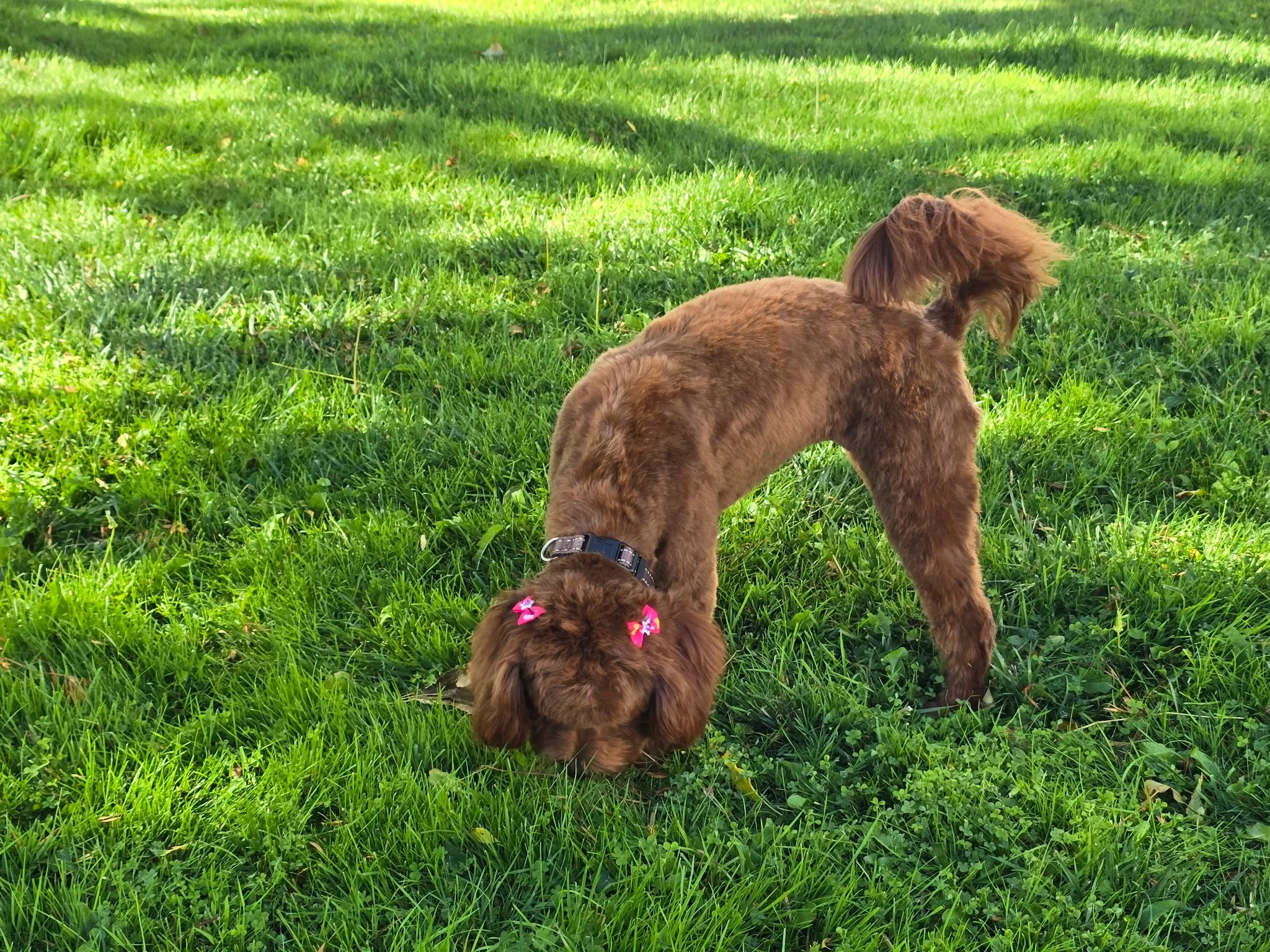
The Expert Has Entered the Garden
My California Recommendation
For most residential dog runs, this is how I would think about it:
Most beautiful natural option: Carex, fine fescue, or meadow-style planting in a larger dog area with enough space for recovery.
Best design approach: a planted dog garden with soft groundcover grasses, small shrubs, succulents, shade, and little paths for the dog to explore.
Best clean finished look: pet-specific artificial turf, especially in a shaded small dog run with good drainage and regular cleaning.
Best soft natural surface: mulch, especially if the area is part of a garden and the owner is okay refreshing it.
Most practical utility surface: 3/8-inch crushed gravel over a well-draining base.
Use with caution: DG, GraniteCrete, or other stabilized fines in heavy-use potty areas.
Use only when needed: concrete, if easy cleaning is more important than comfort or appearance.
The Honest Answer
The best dog run is not always the one that looks perfect on day one. It is the one that still works after the dog has used it every day.
For a small side yard, that may mean shaded pet turf or a practical gravel area with excellent drainage.
For a bigger California property, my favorite answer is more layered: soft grasses, low planting, a few shrubs or succulents, small paths, shade, and a surface that can recover.
A dog run should not feel like an afterthought. It can be part of the garden.
It can be useful, washable, beautiful, and still a little wild.
And of course, comfort still matters. Because if Lulu has taught me anything, it is that the dog will always have her own opinion about the design.
